
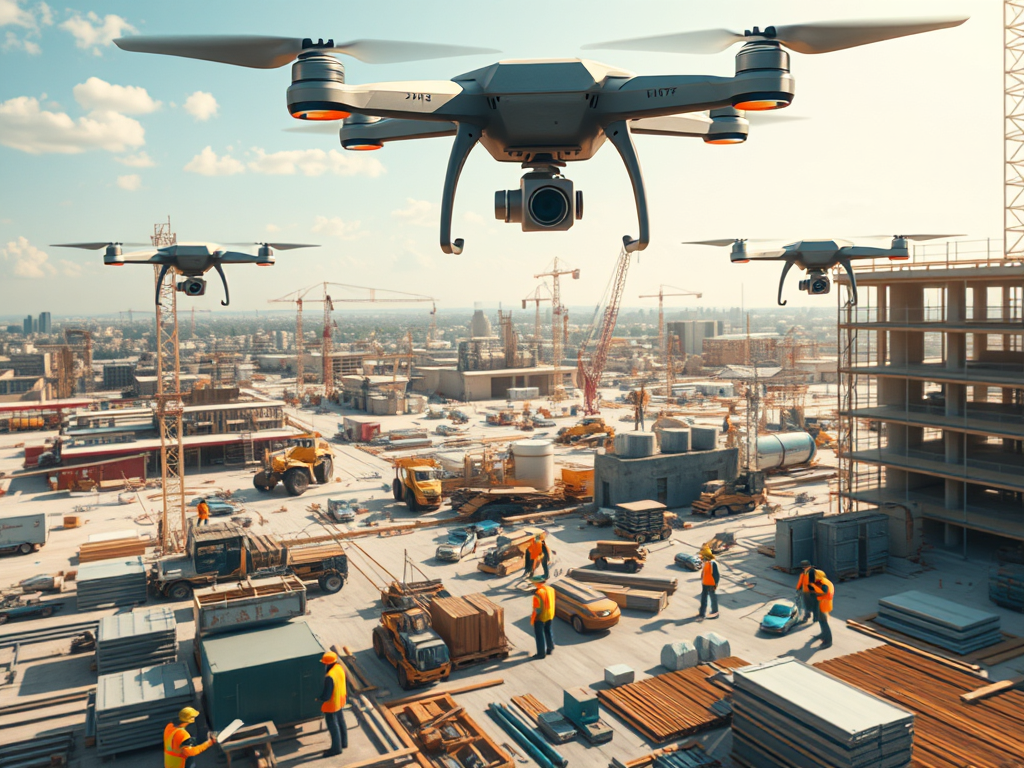
Benefits of Drones in Construction Projects
- Accurate progress monitoring through high-resolution aerial imagery allows for precise tracking of construction progress.
Flying drones over construction sites on a weekly, bi-weekly, or monthly basis offers a multitude of benefits for measuring construction progress and fostering team collaboration. Here are several key reasons:
1. Accurate Progress Monitoring
Drones provide high-resolution aerial imagery and detailed data that allow project managers to track construction progress accurately. By capturing images from the same angles over time, teams can easily compare the current state of the project with before images, making it simpler to gauge whether the work is on schedule.
2. Enhanced Communication
Regular drone flights facilitate improved communication among team members. Sharing aerial images and data with stakeholders, including architects, contractors, and clients, keeps everyone informed about project developments. This transparency builds trust and ensures all parties are aligned with the project’s objectives.
3. Safety and Risk Management
Drones can navigate hazardous areas and capture images without putting personnel at risk. This capability allows teams to identify potential safety issues early, enabling proactive measures to mitigate risks. Regular aerial surveys help ensure a safer work environment.
4. Cost-Effectiveness
Utilizing drones can significantly reduce the costs associated with traditional surveying and monitoring methods. Drones can cover large areas in a fraction of the time it would take for teams to do so on foot, leading to time savings and lowering labor costs.
5. Improved Project Planning
Drones assist in creating accurate 3D models and topographical maps of the construction site. This data aids in better project planning and resource allocation, aiding teams in identifying potential challenges before they become significant issues.
6. Environmental Impact Assessments
By regularly monitoring construction sites, drones can help assess and mitigate the environmental impacts of construction activities. This capability ensures that projects comply with regulations and consider surrounding ecosystems.
7. Documentation for Future Reference
Regular drone flights create an extensive visual record of the construction process. This documentation serves as a valuable asset for future projects, helping teams learn from previous experiences.
In summary, the utilization of drones in construction not only enhances monitoring and communication but also contributes to safety, cost savings, and effective project management.